
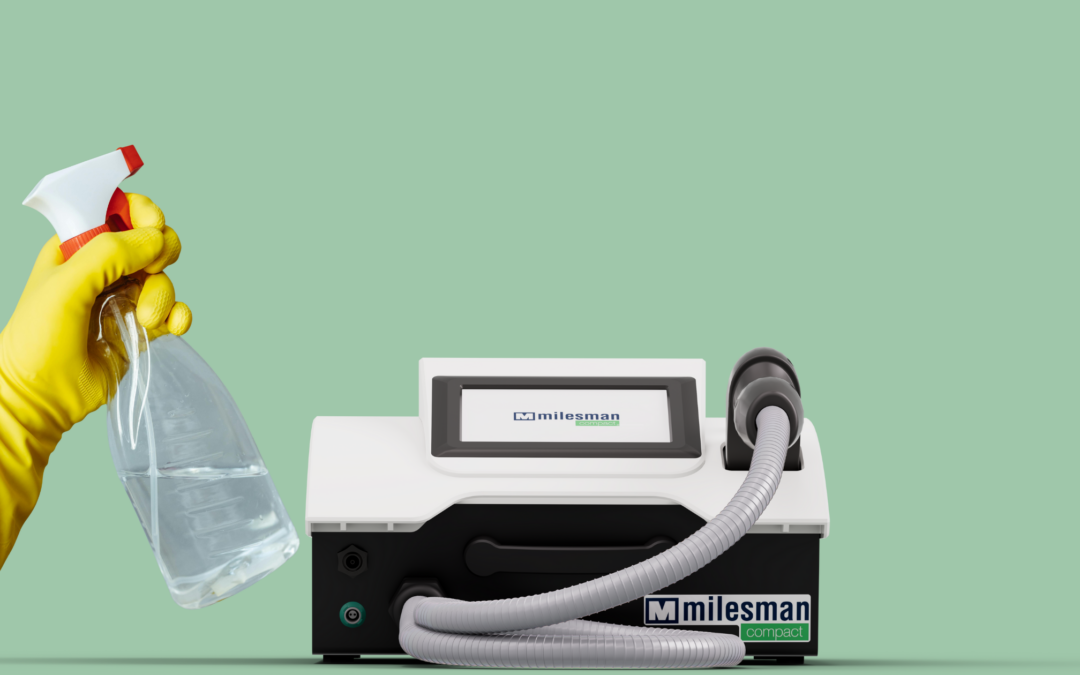
{
“@context”: “https://schema.org/”,
“@type”: “HowTo”,
“name”: “Professional cleaning of your diode laser”,
“description”: “How to clean your diode laser correctly and comply with health regulations”,
“image”: “https://milesman.com/wp-content/uploads/2026/01/3.png”,
“totalTime”: “PT30M”,
“estimatedCost”: {
“@type”: “MonetaryAmount”,
“currency”: “EUR”,
“value”: “10”
},
“supply”: {
“@type”: “HowToSupply”,
“name”: “Use 70% or 80% ethyl alcohol”
},
“tool”: [{
“@type”: “HowToTool”,
“name”: “Soft cloth”
},{
“@type”: “HowToTool”,
“name”: “Latex gloves”
}],
“step”: [{
“@type”: “HowToStep”,
“text”: “Before you start, create a safe environment for yourself and the device. Switch off the device and unplug it from the mains. Put on latex or nitrile gloves to avoid transferring dirt or oils. Avoid corrosive or abrasive liquids that could damage delicate components.”,
“name”: “Preparation: safety first”
},{
“@type”: “HowToStep”,
“text”: “For the external surfaces and the screen, follow these guidelines. Use a soft microfibre cloth lightly dampened with a mild agent. Wipe the housing gently, preventing liquid from entering slots or ports. Do not spray, spill or wet the handpiece, the central unit or the touchscreen with liquid. Do not rub hard, to avoid scratching. Do not use grease, gel or abrasive cleaners on the screen.”,
“name”: “Cleaning the external surfaces and screen”
},{
“@type”: “HowToStep”,
“text”: “The lenses and the sapphire tip of the handpiece must be treated with the utmost care. A build-up of residue could cause overheating and prevent the laser light from penetrating correctly.
Specific protocol for the sapphire tip:
Never apply alcohol directly onto the handpiece. Apply a small amount of 70% or 80% ethyl alcohol to a clean cloth and use it to clean the tip only. Once the residue has been removed, dry the handpiece with another clean cloth. Wait at least one minute for the remaining alcohol to evaporate. No visible residue should remain. Carry out a final visual inspection.”,
“name”: “Cleaning the lenses and heads: the heart of the laser”
},{
“@type”: “HowToStep”,
“text”: “The user may only carry out the frequent, routine cleaning of the handpiece tip and the touchscreen. Consult the user manual for internal technical maintenance guidelines. Avoid opening the device unless you are a certified technician. Opening the housings can result in exposure to optical radiation and dangerous voltages, damage and loss of the warranty. Clean the external surfaces and lenses daily. For deep maintenance, it is advisable to have the complete device inspected once a year by an authorised professional.”,
“name”: “Routine maintenance and the limits of the user”
},{
“@type”: “HowToStep”,
“text”: “Cleaning is part of a culture of professional quality and safety. A well-cleaned device lasts longer and delivers safer, more precise treatments. European and Spanish regulations require these devices to meet safety and performance requirements. Proper cleaning and maintenance, following the manufacturer’s instructions, protect your investment and form part of compliance with standards designed to reduce risks. Respecting the boundaries between the user’s external cleaning and the technician’s internal intervention is the guarantee of safety, optimal performance and the validity of the warranty.”,
“name”: “Conclusion and regulations”
}]
}
1. Preparation: safety first
2. Cleaning the external surfaces and screen
3. Cleaning the lenses and heads: the heart of the laser (with a specific protocol for the sapphire tip)
- Never apply the alcohol directly onto the handpiece. Instead, apply a small amount to a clean cloth and use it to clean the tip of the handpiece only.
- Use 70% or 80% ethyl alcohol on the cloth to disinfect and remove carbonised residue.
- Once the residue has been removed, dry the handpiece with another clean cloth. After drying, allow at least another minute for the remaining alcohol to evaporate. No visible residue should remain.
- Carry out a final visual inspection. If any dirt remains, repeat the process.
4. Routine maintenance and the limits of the user
5. Did you know that there are also health and regulatory rules that support these good practices?
Recent Comments