
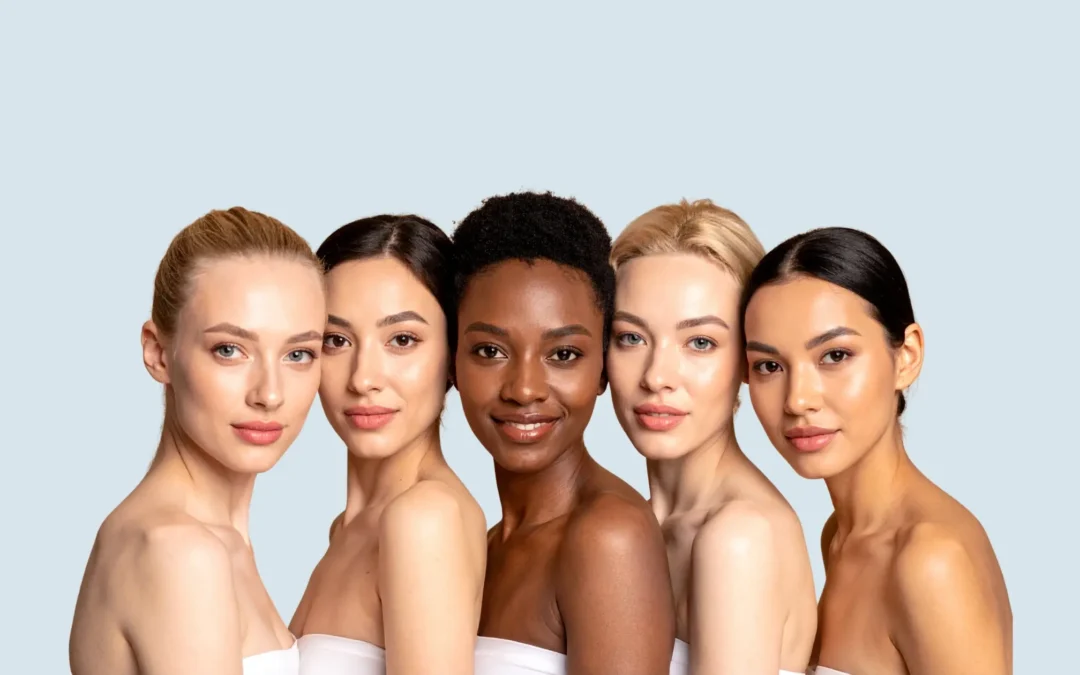
The key to safe, effective results in your day-to-day work in the treatment room
If you work with laser hair removal, you know that no two skins are alike. And you also know that, quite often, the success of the treatment does not depend on the device alone… but on how you read the skin in front of you.
One of the concepts that most influences results, and that tends to raise the most questions, is the skin phototype. Today we want to help you understand it in a way that is clear, straightforward and, above all, useful for your daily practice.
What is the skin phototype?
The phototype is the skin’s natural response to the sun. In other words: whether it burns easily, whether it tans, how long it takes to do so and with what intensity.
It is not something that changes from one day to the next, nor does it depend solely on the colour we see with the naked eye. The phototype is genetically determined and is directly related to the amount of melanin in the skin.
Key point: Melanin is the absolute protagonist in laser hair removal. It is the pigment that gives colour to both the hair and the skin. In laser hair removal, the objective is very specific: for the melanin in the hair to absorb the laser energy, convert it into heat and destroy the cells responsible for the hair growing back.
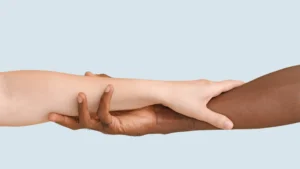
Melanin: our ally… if we know how to work with it
So what happens to melanin during the laser treatment?
- When there is a lot of melanin in the hair, the treatment is more effective.
- When there is a lot of melanin in the skin, we must be more careful, because that skin can also absorb energy.
This is why knowing the phototype well is not a mere formality: it is a matter of safety, effectiveness and professionalism.
The phototypes according to Fitzpatrick (explained without complications)
The most widely used classification is the one by Dr Fitzpatrick, which divides the skin into six phototypes:
Phototype I Very fair skin, usually redheads. Always burns and never tans. | Phototype II Fair skin. Burns easily and achieves a light tan. | Phototype III Fair or beige skin. Sometimes burns and tans gradually. |
Phototype IV Olive skin. Rarely burns and tans easily. | Phototype V Dark skin. Does not burn and tans very intensely. | Phototype VI Black skin. High concentration of melanin and maximum tolerance to the sun. |
Each of these phototypes requires a different way of working with the laser. And this is where your professional judgement comes in.
How does the phototype influence the laser treatment?
To put it simply and clearly:
Low phototypes (I, II and III) They allow you to work with shorter pulses and higher fluences, which usually translates into faster results. The skin has less melanin, so the risk of absorption by the epidermis is lower. | High phototypes (IV, V and VI) They require longer pulses and lower fluences, in order to heat the hair gradually and protect the epidermis. This does not mean poorer results, but rather gentler treatments, with well-planned sessions. |
Correctly identifying the phototype: one of your most important decisions
With the naked eye we can get a sense of the phototype, but that is not always enough. This is why it is so important to rely on specific questionnaires, the clinical history and, when necessary, to carry out a tolerance test.
This step makes the difference between “carrying out a session” and delivering a professional, safe and personalised treatment that truly meets your client’s expectations.
Technology that supports knowledge
When knowledge is combined with technology designed to adapt to each skin, the work becomes much easier. Devices such as milesman Compact, with parameters adjustable according to the phototype and a continuous cooling system, make it possible to treat all skin types with confidence, even the most demanding ones.
To make your day-to-day work easier, we have a questionnaire for assessing phototypes and also a protocol chart for carrying out hair removal.
If you would like to receive them, get in touch with us and we will send them to you directly.
© 2026 Professional guide to skin phototypes for laser hair removal
Information based on the Fitzpatrick classification and standard safety protocols
Recent Comments